
The Golden Triad: Why ISO 27001, 27701, and 42001 are the Ultimate Stack for Modern SaaS
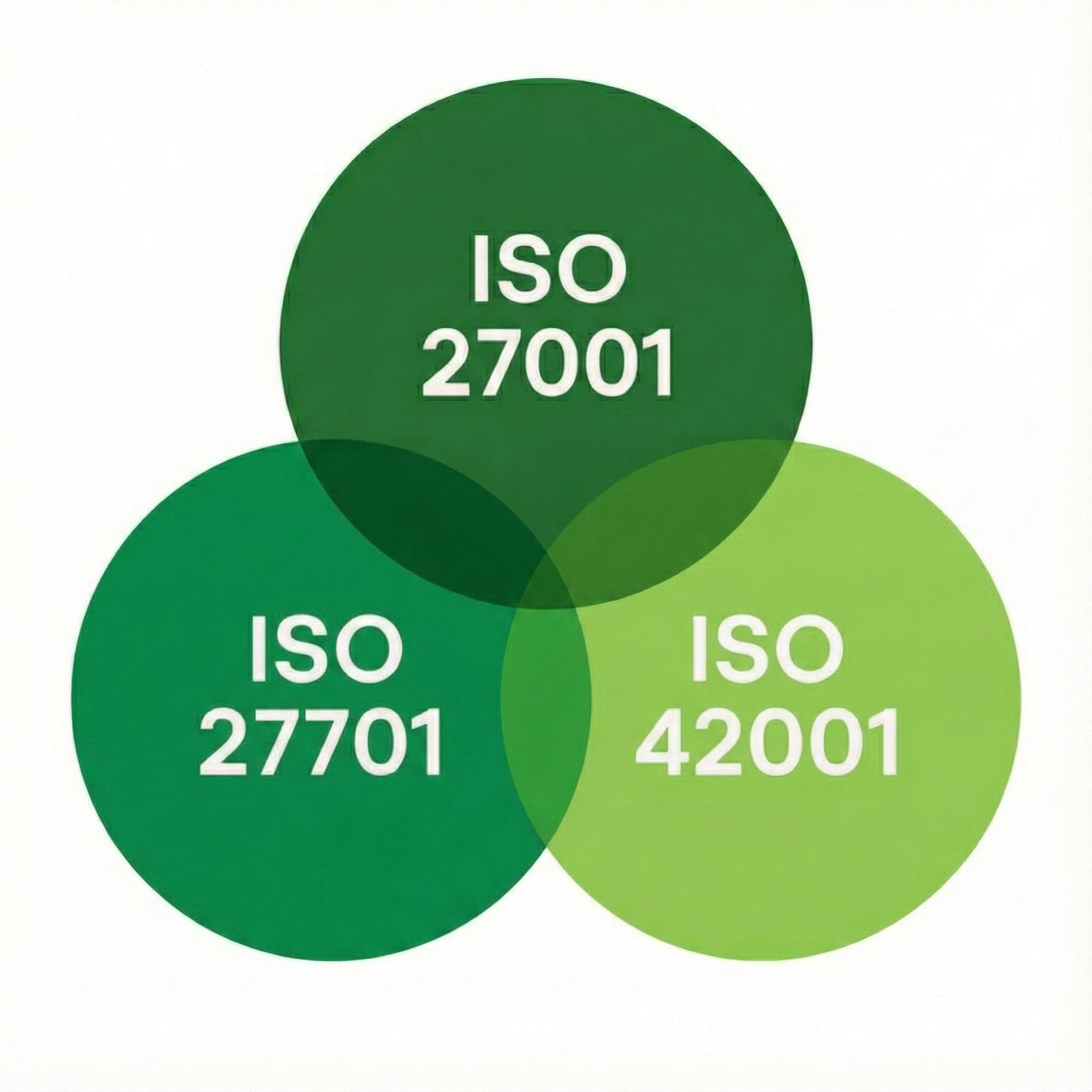
In the current technology landscape, "move fast and break things" is no longer a viable strategy for enterprise growth. Today, the currency of the SaaS and tech industry is trust.
As companies race to integrate Generative AI and process massive datasets, they face a three-pronged pressure:
Security threats are becoming more sophisticated.
Privacy regulations (GDPR, DPA) are tightening.
AI anxiety regarding bias, hallucination, and copyright is dominating boardrooms.
For forward-thinking technology companies, the solution lies in a unified approach to governance. By combining ISO 27001 (Information Security), ISO 27701 (Privacy), and the newly released ISO 42001 (AI Management), organisations can build a "Golden Triad" of compliance.
Here is why this specific combination is the future of SaaS governance.
1. The Components of the Triad
To understand the synergy, we must first look at the unique role each standard plays.
The Foundation: ISO 27001 (Security)
ISO/IEC 27001 is the bedrock. It establishes an Information Security Management System (ISMS). It answers the question: Are we keeping the data safe?
Focus: Confidentiality, Integrity, and Availability (CIA).
Role: It ensures the perimeter is secure, access is controlled, and disaster recovery plans exist. Without this, the other two standards have no ground to stand on.
The Extension: ISO 27701 (Privacy)
ISO/IEC 27701 is a privacy extension to ISO 27001. It establishes a Privacy Information Management System (PIMS). It answers the question: Are we respecting the rights of the people whose data we hold?
Focus: PII (Personally Identifiable Information) processing, consent, and data subject rights.
Role: It bridges the gap between general security and specific regulations like GDPR. It proves you aren't just securing data, but handling it ethically.
The New Frontier: ISO 42001 (AI Governance)
ISO/IEC 42001 is the world’s first global standard for AI management systems. It answers the question: Is our AI trustworthy, transparent, and safe?
Focus: Fairness, explainability, transparency, and managing the unique risks of machine learning (e.g., bias, data poisoning).
Role: It addresses the "black box" problem, ensuring that AI systems are developed and deployed responsibly.
2. Why They Are a "Perfect Combination"
Individually, these standards are powerful. Together, they form an Integrated Management System (IMS) that creates a competitive moat.
A. The "Annex SL" Advantage
All three standards follow the Harmonised Structure (formerly Annex SL). This means they share the same high-level structure (Context of Organisation, Leadership, Planning, Support, etc.).
Efficiency: You do not need three separate manuals. You can have one unified policy framework where the risk assessment covers security, privacy, and AI simultaneously.
Reduced Audit Fatigue: Because the controls overlap, you can often audit these standards in parallel, saving time and consulting fees.
B. Addressing the "AI Data Cycle"
In a modern SaaS AI product, the lines between these three domains are blurred. Consider a customer support AI chatbot:
Security (27001): The chat logs must be encrypted and access-controlled.
Privacy (27701): The logs contain customer names and addresses (PII) which must be minimised and deletable upon request.
AI Governance (42001): The AI must not hallucinate harmful advice or discriminate against the user based on the chat input.
If you only have ISO 27001, you might secure the chatbot, but you remain vulnerable to privacy lawsuits and AI reliability scandals. The triad covers the entire lifecycle of the data.
C. Future-Proofing for Regulation
The regulatory landscape is shifting toward this exact combination.
The EU AI Act: This legislation mandates strict governance for high-risk AI. ISO 42001 is widely viewed as the best framework to demonstrate compliance with the EU AI Act.
GDPR: ISO 27701 is the closest mapping to GDPR requirements for processors and controllers.
By adopting this triad, you are not just checking boxes for today; you are insulating your company against the regulatory tsunami of tomorrow.
3. The Commercial Impact for SaaS
For B2B SaaS companies, this combination is a massive sales enabler.
Shortened Sales Cycles
Enterprise procurement teams often send 200-question security questionnaires. Being triple-certified allows you to bypass large sections of due diligence.
Market Differentiation
While competitors may have ISO 27001, very few currently hold ISO 42001. It signals to investors and clients that you are a mature, "enterprise-ready" AI company.
Trust as a Product
In an era of "Deepfakes" and data breaches, being able to prove independent certification of your AI and Privacy controls converts trust into a tangible asset.
Conclusion
ISO 27001 secures the house. ISO 27701 protects the people inside. ISO 42001 ensures the automated systems running the house don’t go rogue.
For technology and SaaS companies, implementing these three standards as a unified framework is no longer just a compliance exercise—it is a strategic imperative. It demonstrates a holistic maturity that satisfies regulators, comforts customers, and creates a solid foundation for scalable innovation.